 nermeenabdelkader95@gmail.com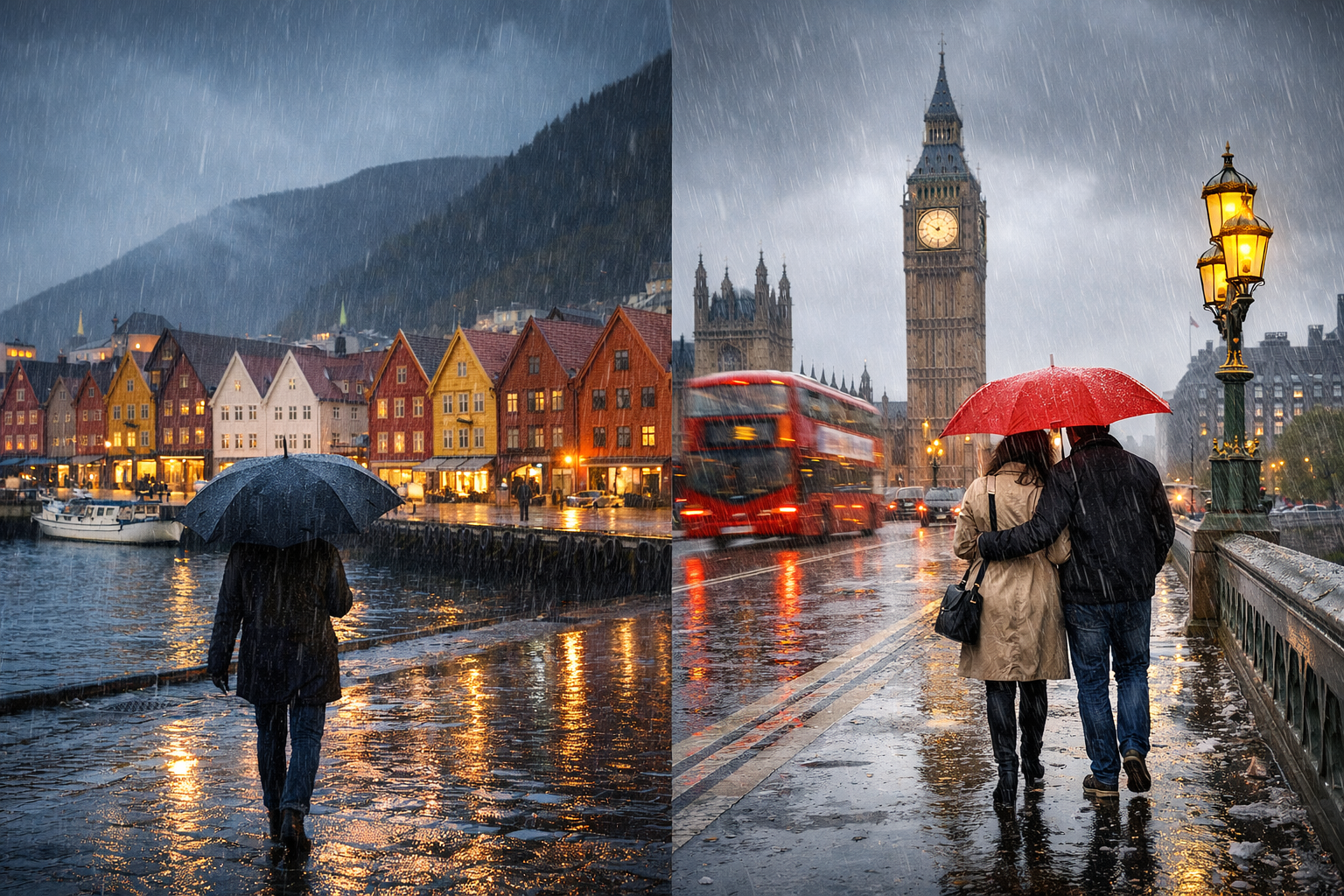
When people think about traveling in Europe, sunny streets and clear skies often come to mind. However, some of the continent’s most beautiful and culturally rich cities are also among the rainiest. Rain doesn’t just shape the weather—it influences architecture, lifestyle, and even the character of these destinations.
For travelers who don’t mind a little drizzle—or even enjoy it—these cities offer a unique and atmospheric experience.
Why Some European Cities Get More Rain
Rainfall in Europe is heavily influenced by geography. Cities located near the Atlantic Ocean or in mountainous regions tend to receive more precipitation.
Oceanic climates, especially in Western Europe, bring moist air that results in frequent rain. Meanwhile, mountainous areas can trap clouds, increasing rainfall levels.
Unlike tropical regions, rain in Europe is often light and spread across many days rather than falling in heavy storms.
1. Bergen, Norway
Bergen is widely considered the rainiest city in Europe. It receives rainfall on more than 200 days per year.
Located on Norway’s western coast and surrounded by mountains, Bergen traps moisture-rich air from the North Sea. The result is frequent and consistent rain throughout the year.
Despite this, the city’s colorful buildings and dramatic landscapes make it incredibly beautiful, especially in misty weather.
2. Glasgow, Scotland
Glasgow is one of the wettest cities in the United Kingdom. Rainfall is frequent, especially during autumn and winter.
The city’s weather is often cloudy, with light rain or drizzle occurring regularly. However, Glasgow’s vibrant culture and architecture make it appealing regardless of the weather.
3. Manchester, England
Manchester has a reputation for being rainy—and not without reason. The city experiences consistent rainfall throughout the year, often in the form of light showers.
While it may not receive the heaviest rainfall in terms of volume, the frequency of rain makes it feel constantly damp.
4. Dublin, Ireland
Dublin experiences frequent rain due to its coastal location and Atlantic influence. However, the rain is usually light and short-lived.
The city’s green landscapes are a direct result of its consistent rainfall, giving it a fresh and lively appearance.
5. Brussels, Belgium
Brussels experiences steady rainfall throughout the year, with no distinct dry season. Showers can occur at any time, often without much warning.
Despite this, the city remains a popular destination thanks to its historic charm and central location in Europe.
6. Amsterdam, Netherlands
Amsterdam is known for its cloudy skies and frequent rain. The city’s flat landscape and proximity to water contribute to its weather patterns.
Rain is often light but persistent, making umbrellas and raincoats essential items for visitors.
7. Paris, France
While not the rainiest city in Europe, Paris experiences regular rainfall spread across the year.
The rain is typically light and adds to the city’s romantic atmosphere. Walking along the Seine in light rain is often seen as part of the Paris experience.
8. London, United Kingdom
London is famous for its rain, although it rarely experiences heavy downpours. Instead, the city is known for frequent light rain and cloudy skies.
This type of weather contributes to London’s unique atmosphere, making it feel cozy and calm.
9. Zurich, Switzerland
Zurich experiences moderate to high rainfall, particularly during summer when thunderstorms are more common.
The surrounding mountains play a role in increasing precipitation levels, especially during seasonal transitions.
10. Milan, Italy
Milan receives more rainfall than many other Italian cities, particularly during spring and autumn.
Rain can sometimes be heavier here compared to cities like Paris or London, often occurring in short but intense bursts.
What to Expect When Visiting Rainy Cities
Traveling to rainy destinations doesn’t mean your trip will be ruined. In fact, it can offer a completely different perspective.
Rain often means:
- Fewer tourists
- Cooler temperatures
- Unique photo opportunities
- A more relaxed atmosphere
Many cities become even more charming under cloudy skies.
Tips for Traveling in Rainy Weather
To enjoy your trip fully, it’s important to be prepared:
- Always carry a compact umbrella
- Wear waterproof shoes
- Plan indoor activities as alternatives
- Check hourly weather forecasts
Being prepared allows you to enjoy the city regardless of the weather.
Conclusion
Rainy cities in Europe offer a different kind of beauty—one that is calm, reflective, and deeply atmospheric. While sunshine may be ideal for some travelers, others find charm in cloudy skies and gentle rain.
Whether it’s the misty streets of Bergen or the drizzly charm of London, these destinations prove that rain can enhance the travel experience rather than limit it.


 ahmedelghanam2019