nermeenabdelkader95@gmail.com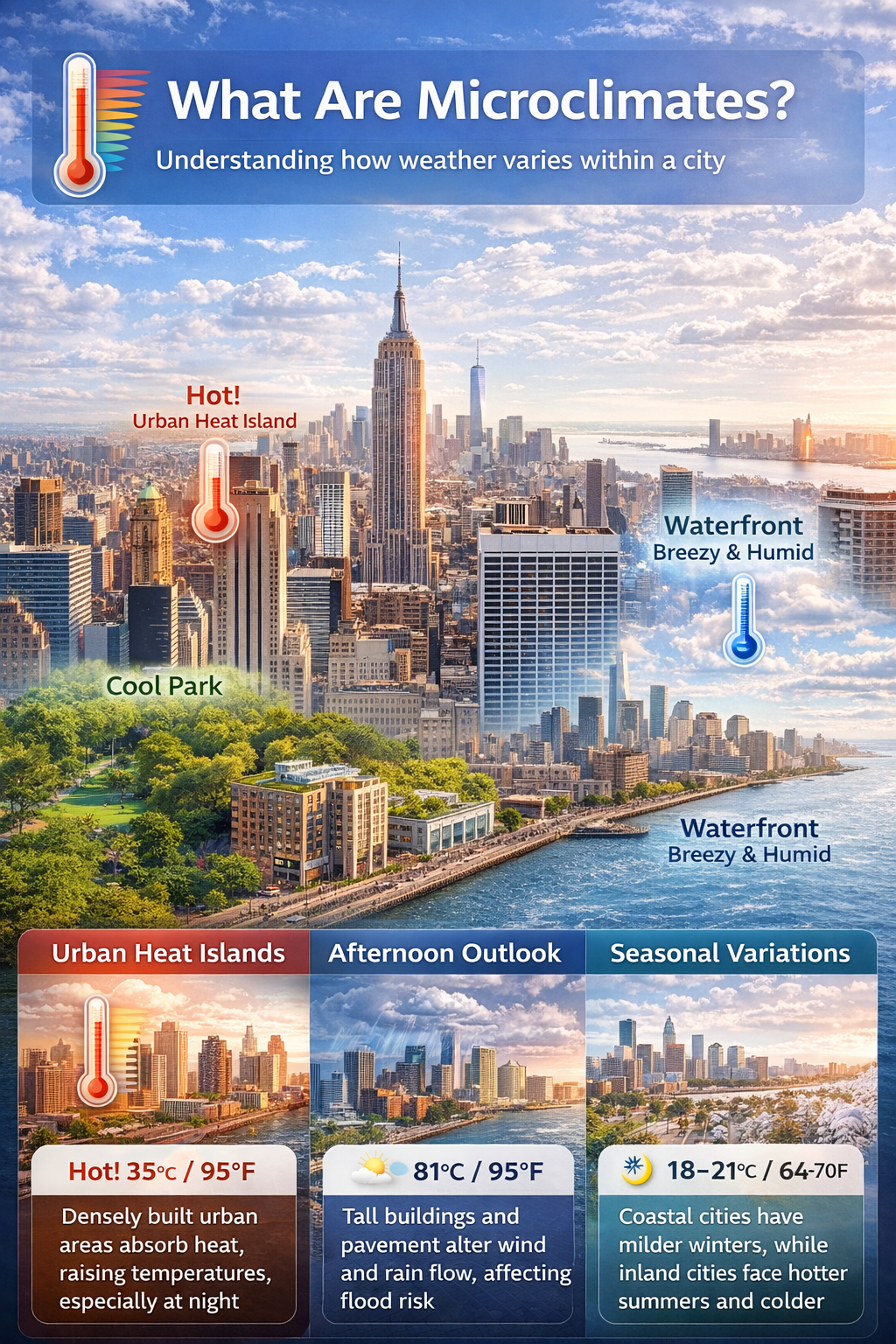
Cities are complex environments where weather can vary significantly from one neighborhood to another. These localized variations, called microclimates, are influenced by factors such as building density, green spaces, water bodies, and transportation infrastructure. Recognizing and understanding microclimates helps city planners, residents, and businesses make better decisions regarding energy use, outdoor activities, and public safety.
What Are Microclimates?
A microclimate is a small area with a climate that differs from the surrounding city. For example, a park with many trees may be cooler in summer than nearby streets, while areas near rivers or lakes often have more humidity and lower temperatures. Roof gardens and reflective surfaces can also create microclimates that reduce heat during peak summer hours.
Urban Heat Islands
One of the most well-known microclimate effects in cities is the urban heat island (UHI) phenomenon. Urban areas with high concentrations of buildings and asphalt absorb and store heat, causing local temperatures to rise compared to surrounding rural regions. This effect is most noticeable during heatwaves and can increase energy demands for cooling, exacerbate air pollution, and impact public health.
Rainfall and Storm Effects in Cities
Cities can also influence rainfall patterns. Tall buildings can change wind flow, creating areas of concentrated rainfall or wind tunnels. Streets and sidewalks, combined with stormwater management systems, affect how quickly rainwater is absorbed or drained, impacting flood risks. Residents need to be aware of these variations, especially in cities prone to heavy storms.
Seasonal Impacts on Urban Weather
Seasons affect cities differently depending on geography. Coastal cities may experience mild winters and humid summers, while inland cities can face severe heat in summer and harsh cold in winter. Understanding seasonal weather patterns helps municipalities prepare for events like snow removal, heat alerts, and emergency services deployment.
Practical Tips for City Residents
- Monitor Local Weather Alerts – City weather can change rapidly; rely on local apps and news for updates.
- Dress Accordingly – Microclimates can make some areas cooler or warmer than others; plan your clothing based on specific routes and locations.
- Manage Outdoor Activities – Parks and green spaces may provide cooler relief during hot days, while riverside paths may be windier.
- Prepare for Rain or Snow – Check drainage areas and public transit schedules during extreme weather events to avoid disruptions.
Conclusion
Understanding city weather and microclimates is essential for a safer, more comfortable urban life. By considering local variations, residents can enjoy outdoor activities, stay healthy, and minimize the impact of extreme weather events. City planners can also use this information to design more sustainable and resilient urban environments.